
COVID-19 vaccine
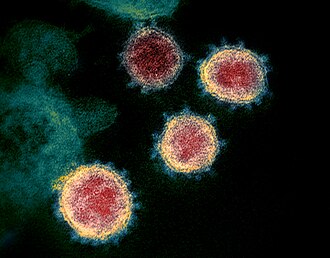
A COVID‑19 vaccine is designed to help protect people from getting very sick, being hospitalized, or dying from the virus that causes COVID‑19. These vaccines work by teaching the body to recognize and fight the virus called SARS-CoV-2.
COVID‑19 vaccines were created very quickly to help stop the COVID-19 pandemic. Scientists used new technologies and also built on past research about other similar viruses, like those that cause coronaviruses, SARS, and MERS. Important awards, such as the 2023 Nobel Prize in Physiology or Medicine, recognized the work that made these vaccines possible.
Some of the main vaccines include the Pfizer–BioNTech mRNA vaccine, Moderna mRNA vaccine, and the Novavax protein subunit vaccine. Because new versions of the virus, called SARS-CoV-2 variants, appeared, these vaccines were updated to better protect against them. People may need extra doses, called booster doses, to keep their protection strong.
Most people who get a COVID‑19 vaccine feel fine, but some might have minor side effects like a sore arm, tiredness, headache, or muscle aches. These feelings usually go away on their own in a few days. Vaccines are safe for everyone, including pregnant people and those who are breastfeeding.
Thanks to these vaccines, many lives were saved. They helped reduce how much the virus spread and made illnesses less severe. Countries around the world worked together to make sure that people, especially those most at risk, could get vaccinated. By August 2024, over 13 billion doses of COVID‑19 vaccines had been given to people worldwide.
Background
Before COVID-19, creating a vaccine for a new disease took many years, and there were no vaccines for human coronavirus infections. However, scientists had made vaccines for some animal diseases caused by similar viruses.
Researchers had previously worked on vaccines for two serious human diseases, severe acute respiratory syndrome (SARS) and Middle East respiratory syndrome (MERS), but these vaccines were only tested on animals. By March 2020, one MERS vaccine had started early human testing.
Some vaccines use a weakened virus grown in eggs, which takes a long time to make. But a different kind of vaccine, using mRNA, can be made much faster. Scientists had been studying mRNA for many years, and companies like Moderna began testing mRNA vaccines before the COVID-19 pandemic. Another type of vaccine, called viral vector vaccines, was also used for COVID-19 after being approved for other diseases like Ebola.
Vaccine technologies
COVID-19 vaccines were developed quickly to help stop the spread of the virus. The first vaccines focused on stopping serious illness. Most needed two doses, but some only needed one dose, like Convidecia and the Janssen COVID-19 vaccine.
Scientists used many different methods to make these vaccines. One important target was the coronavirus spike protein, which helps the virus enter our cells. Vaccines teach our bodies to recognize and fight the virus if we are exposed to it.
mRNA vaccines
Further information: mRNA vaccine
Some vaccines, like Pfizer–BioNTech and Moderna, use a tiny piece of the virus’s genetic material called mRNA. This mRNA tells our cells to make a piece of the virus, which helps our immune system learn to fight it. These vaccines were the first to be approved in many countries.
Viral vector vaccines
Viral vector vaccines use a harmless version of another virus to carry pieces of the COVID-19 virus into our cells. This helps our immune system learn to fight the real virus. Examples include the Oxford–AstraZeneca COVID-19 vaccine and the Sputnik V COVID-19 vaccine.
Inactivated virus vaccines
Some vaccines use whole virus particles that have been treated so they can’t cause illness. These vaccines still help our bodies learn to fight the virus. Examples include CoronaVac and the Sinopharm BIBP vaccine.
Subunit vaccines
Other vaccines use only small pieces of the virus, called antigens. These pieces teach our immune system to recognize the virus without using the whole virus. Examples include Corbevax and the Novavax COVID-19 vaccine.
Other types
Scientists are also studying other ways to make vaccines, including using different viruses or pieces of DNA. Some research looked at whether older vaccines might help, but they did not work well against COVID-19.
Authorized vaccines
Main article: List of COVID-19 vaccine authorizations
By the end of 2022, 50 COVID-19 vaccines had been approved or allowed for emergency use in different countries.
The World Health Organization keeps track of virus changes and how well updated vaccines work against them. As of May 2025, the WHO suggests that vaccines targeting JN.1 or KP.2 are good choices, and LP.8.1 can also be used. The European Medicines Agency suggests updating COVID-19 vaccines to target LP.8.1 for the 2025/2026 vaccination campaign. The US FDA advised that from fall 2025, COVID-19 vaccines should target the JN.1 strain, preferably using the LP.8.1 version.
Combination vaccines
A combined messenger RNA vaccine to protect against both influenza and COVID-19 was introduced in 2026.
Delivery methods
Most coronavirus vaccines are given by intramuscular injection, but scientists are also looking at other ways to give future vaccines.
One new method being studied is called intranasal vaccination. These vaccines target the lining inside the nose, which is a place where viruses can enter the body. They work by helping the nose create special defenses without needing needles, which can be helpful for people who are afraid of needles.
Several intranasal COVID‑19 vaccines are being tested in clinical trials. The first one approved for use was Razi Cov Pars in Iran in October 2021. Later, Russia approved a nasal version of the Sputnik V vaccine in April 2022. In September 2022, India and China approved two nasal vaccines (iNCOVACC and Convidecia), and China approved another one called Pneucolin in December 2022.
Universal vaccine
Main article: Universal coronavirus vaccine
A universal coronavirus vaccine would work against all coronaviruses and maybe even other viruses. In March 2022, the White House suggested speeding up the creation of such a vaccine.
One example of this type of vaccine is being made at the Walter Reed Army Institute of Research. It uses a special tiny particle called a spike ferritin-based nanoparticle (SpFN). Testing of this vaccine began in April 2022, and results were shared in May 2024. Other vaccines in testing include OVX033 and PanCov in France, pEVAC-PS in the UK, and VBI-2902 in Canada.
Another idea is to connect pieces from many different virus strains to a tiny support structure. This might help protect against more strains by focusing on a key part of the virus instead of the whole structure.
Development
In June 2025, the European Medicines Agency shared public data from applications for two COVID‑19 vaccines called Comirnaty and Spikevax.
Creating a COVID‑19 vaccine involved many important steps. These included checking that the vaccines were safe, making sure they worked well, deciding how many doses people needed, and figuring out the best ways to store and deliver them. Scientists also had to work quickly because of the urgent need for a vaccine during the pandemic.
There were special challenges in developing these vaccines quickly. Normally, testing a vaccine takes many years, but during the pandemic, scientists worked on many steps at the same time to speed things up. This made it harder to find enough people to test the vaccines, especially as the spread of the virus changed over time. Countries and companies around the world worked together to support vaccine development, with groups like the Access to COVID‑19 Tools Accelerator, led by the World Health Organization, helping to share resources and knowledge. Governments, such as those in Canada, China, the United Kingdom, and the United States, also provided funding and support to speed up the process. Large drug companies joined forces with smaller biotechnology firms to help make and test the vaccines faster.
Effectiveness
COVID-19 vaccines help protect people from getting very sick, being hospitalized, or dying from the virus. They work best against severe illness, but they also help lower the chance of catching the virus, especially soon after getting vaccinated. Over time, the protection from vaccines can go down, but getting booster shots helps bring protection back up.
Different versions of the virus, like Omicron, can sometimes get around the protection from vaccines, but vaccines still keep people from getting very sick. Mixing different types of COVID-19 vaccines, called heterologous vaccination, also works well and gives strong protection. Vaccines may also help lower the chance of getting long COVID, a condition where symptoms last a long time after the infection.
Adverse effects
The risks of serious illness from COVID-19 are much higher than any risk from the vaccines. For most people, side effects from COVID-19 vaccines are mild and can be taken care of at home. These side effects are similar to those from other vaccines, and serious side effects are very rare.
Common side effects include soreness at the place where the shot was given, feeling tired, having a headache, and muscle or joint pain. These usually get better on their own within a few days. Some people might feel these effects more strongly after the second dose of the vaccine. The vaccines are safe for everyone, including those who are breastfeeding. Some women have noticed small changes in their monthly cycles after getting the vaccine, but these changes go back to normal after a couple of cycles.
Serious side effects are rare but are watched closely by health experts around the world. Studies show that the benefits of getting the vaccine far outweigh any small risks. For example, getting COVID-19 itself is much more likely to cause serious health problems than the vaccine.
Distribution and access
Distribution
Main article: Deployment of COVID-19 vaccines
The number of people who have had at least one dose of a COVID-19 vaccine varies a lot around the world. Some places have many doses, while others have very few. This difference can make the total number of vaccinated people look higher than the actual population of a country.
Access during the pandemic
Further information: Deployment of COVID-19 vaccines § Equitable access, TRIPS Agreement waiver, and COVAX
Getting vaccines has not been fair for everyone. Some countries got many doses early, while others got very few. This unfairness has hurt both rich and poor countries.
Some countries bought vaccines before they were even available. By November 2020, rich countries had bought most of the early vaccines, even though they are only a small part of the world’s population.
In January 2021, a leader at the World Health Organization pointed out that many rich countries had given out thousands of doses, while some of the poorest countries had only given out just a few.
In March 2021, the United States tried to stop Brazil from buying a different vaccine, worried about influence from another country. Some places had trouble getting vaccines because of disagreements between countries.
In Egypt, vaccines were expensive for many people, and a lawyer asked the government to make them free for everyone.
Experts say that to stop the virus, the whole world needs to be vaccinated, not just one country. Some people are asking richer countries to share their extra vaccines because if the virus spreads in poor countries, it can change and become harder for vaccines to work.
In May 2021, the United States said it would support sharing vaccine recipes to help make more vaccines for poor countries. In July 2021, leaders from several global groups said it’s very important to get vaccines to everyone to end the pandemic.
In August 2021, the World Health Organization asked rich countries to wait on giving extra doses until poor countries get more. But some countries planned to give extra doses to their people anyway.
Even though vaccines are very good at preventing serious illness, it’s still important for everyone to keep using safety measures like washing hands and staying apart, especially when there are many cases in the community. This helps protect people who are more likely to get very sick.
| Location | Vaccinated | Percent | |
|---|---|---|---|
 | World | 5,645,247,500 | 70.71% |
 | China | 1,318,026,800 | 92.48% |
 | India | 1,027,438,900 | 72.08% |
 | European Union | 338,481,060 | 75.43% |
 | United States | 270,227,170 | 79.12% |
 | Indonesia | 204,419,400 | 73.31% |
 | Brazil | 189,643,420 | 90.17% |
 | Pakistan | 165,567,890 | 67.94% |
 | Bangladesh | 151,507,170 | 89.45% |
 | Japan | 104,740,060 | 83.79% |
 | Mexico | 97,179,496 | 75.56% |
 | Nigeria | 93,829,430 | 42.05% |
 | Vietnam | 90,497,670 | 90.79% |
 | Russia | 89,081,600 | 61.19% |
 | Philippines | 82,684,776 | 72.55% |
 | Iran | 65,199,830 | 72.83% |
 | Germany | 64,876,300 | 77.15% |
 | Turkey | 57,941,052 | 66.55% |
 | Thailand | 57,005,496 | 79.47% |
 | Egypt | 56,907,320 | 50.53% |
 | France | 54,677,680 | 82.50% |
 | United Kingdom | 53,806,964 | 78.92% |
 | Ethiopia | 52,489,510 | 41.86% |
 | Italy | 50,936,720 | 85.44% |
 | South Korea | 44,764,956 | 86.45% |
 | Colombia | 43,012,176 | 83.13% |
 | Myanmar | 41,551,930 | 77.30% |
 | Argentina | 41,529,056 | 91.46% |
 | Spain | 41,351,230 | 86.46% |
 | Canada | 34,742,936 | 89.49% |
 | Tanzania | 34,434,932 | 53.21% |
 | Peru | 30,563,708 | 91.30% |
 | Malaysia | 28,138,564 | 81.10% |
 | Nepal | 27,883,196 | 93.83% |
 | Saudi Arabia | 27,041,364 | 84.04% |
 | Morocco | 25,020,168 | 67.03% |
 | South Africa | 24,210,952 | 38.81% |
 | Poland | 22,984,544 | 59.88% |
 | Mozambique | 22,869,646 | 70.03% |
 | Australia | 22,231,734 | 84.85% |
 | Venezuela | 22,157,232 | 78.54% |
 | Uzbekistan | 22,094,470 | 63.24% |
 | Taiwan | 21,899,240 | 93.51% |
 | Uganda | 20,033,188 | 42.34% |
 | Afghanistan | 19,151,368 | 47.20% |
 | Chile | 18,088,516 | 92.51% |
 | Sri Lanka | 17,143,760 | 75.08% |
 | Democratic Republic of the Congo | 17,045,720 | 16.65% |
 | Angola | 16,550,642 | 46.44% |
 | Ukraine | 16,267,198 | 39.63% |
 | Ecuador | 15,345,791 | 86.10% |
 | Cambodia | 15,316,670 | 89.04% |
 | Sudan | 15,207,452 | 30.79% |
 | Kenya | 14,494,372 | 26.72% |
 | Ghana | 13,864,186 | 41.82% |
 | Ivory Coast | 13,568,372 | 44.64% |
 | Netherlands | 12,582,081 | 70.27% |
 | Zambia | 11,711,565 | 58.11% |
 | Iraq | 11,332,925 | 25.72% |
 | Rwanda | 10,884,714 | 79.74% |
 | Kazakhstan | 10,858,101 | 54.20% |
 | Cuba | 10,805,570 | 97.70% |
 | United Arab Emirates | 9,991,089 | 97.55% |
 | Portugal | 9,821,414 | 94.28% |
 | Belgium | 9,261,641 | 79.55% |
 | Somalia | 8,972,167 | 50.40% |
 | Guatemala | 8,937,923 | 50.08% |
 | Tunisia | 8,896,848 | 73.41% |
 | Guinea | 8,715,641 | 62.01% |
 | Greece | 7,938,031 | 76.24% |
 | Algeria | 7,840,131 | 17.24% |
 | Sweden | 7,775,726 | 74.14% |
 | Zimbabwe | 7,525,882 | 46.83% |
 | Dominican Republic | 7,367,193 | 65.60% |
 | Bolivia | 7,361,008 | 60.95% |
 | Israel | 7,055,466 | 77.51% |
 | Czech Republic | 6,982,006 | 65.42% |
 | Hong Kong | 6,920,057 | 92.69% |
 | Austria | 6,899,873 | 76.12% |
 | Honduras | 6,596,213 | 63.04% |
 | Belarus | 6,536,392 | 71.25% |
 | Hungary | 6,420,354 | 66.30% |
 | Nicaragua | 6,404,524 | 95.15% |
 | Niger | 6,248,483 | 24.69% |
 | Switzerland | 6,096,911 | 69.34% |
 | Burkina Faso | 6,089,089 | 27.05% |
 | Laos | 5,888,649 | 77.90% |
 | Sierra Leone | 5,676,123 | 68.58% |
 | Romania | 5,474,507 | 28.56% |
 | Malawi | 5,433,538 | 26.42% |
 | Azerbaijan | 5,373,253 | 52.19% |
 | Tajikistan | 5,328,277 | 52.33% |
 | Singapore | 5,287,005 | 93.58% |
 | Chad | 5,147,667 | 27.89% |
 | Jordan | 4,821,579 | 42.83% |
 | Denmark | 4,746,522 | 80.41% |
 | El Salvador | 4,659,970 | 74.20% |
 | Costa Rica | 4,650,636 | 91.52% |
 | Turkmenistan | 4,614,869 | 63.83% |
 | Finland | 4,524,288 | 81.24% |
 | Mali | 4,354,292 | 18.87% |
 | Norway | 4,346,995 | 79.66% |
 | South Sudan | 4,315,127 | 39.15% |
 | New Zealand | 4,302,330 | 83.84% |
 | Republic of Ireland | 4,112,237 | 80.47% |
 | Paraguay | 3,995,915 | 59.11% |
 | Liberia | 3,903,802 | 72.65% |
 | Cameroon | 3,753,733 | 13.58% |
 | Panama | 3,746,041 | 85.12% |
 | Benin | 3,697,190 | 26.87% |
 | Kuwait | 3,457,498 | 75.33% |
 | Serbia | 3,354,075 | 49.39% |
 | Syria | 3,295,630 | 14.67% |
 | Oman | 3,279,632 | 69.33% |
 | Uruguay | 3,010,464 | 88.78% |
 | Qatar | 2,852,178 | 98.61% |
 | Slovakia | 2,840,017 | 51.89% |
 | Lebanon | 2,740,227 | 47.70% |
 | Madagascar | 2,710,365 | 8.90% |
 | Senegal | 2,684,696 | 15.21% |
 | Central African Republic | 2,600,389 | 51.01% |
 | Croatia | 2,323,025 | 59.46% |
 | Libya | 2,316,327 | 32.07% |
 | Mongolia | 2,284,018 | 67.45% |
 | Togo | 2,255,579 | 27.95% |
 | Bulgaria | 2,155,863 | 31.58% |
 | Mauritania | 2,103,754 | 43.15% |
 | Palestine | 2,012,767 | 37.94% |
 | Lithuania | 1,958,299 | 69.52% |
 | Botswana | 1,951,054 | 79.96% |
 | Kyrgyzstan | 1,736,541 | 24.97% |
 | Georgia | 1,654,504 | 43.60% |
 | Albania | 1,349,255 | 47.72% |
 | Latvia | 1,346,184 | 71.57% |
 | Slovenia | 1,265,802 | 59.84% |
 | Bahrain | 1,241,174 | 80.94% |
 | Armenia | 1,150,915 | 39.95% |
 | Mauritius | 1,123,773 | 88.06% |
 | Moldova | 1,109,524 | 36.50% |
 | Yemen | 1,050,202 | 2.75% |
 | Lesotho | 1,014,073 | 44.36% |
 | Bosnia and Herzegovina | 943,394 | 29.44% |
 | Kosovo | 906,858 | 52.79% |
 | Timor-Leste | 886,838 | 64.77% |
 | Estonia | 870,202 | 64.45% |
 | Jamaica | 859,773 | 30.28% |
 | North Macedonia | 854,570 | 46.44% |
 | Trinidad and Tobago | 754,399 | 50.43% |
 | Guinea-Bissau | 747,057 | 35.48% |
 | Fiji | 712,025 | 77.44% |
 | Bhutan | 699,116 | 89.52% |
 | Republic of the Congo | 695,760 | 11.53% |
 | Macau | 679,703 | 96.50% |
 | Gambia | 674,314 | 25.58% |
 | Cyprus | 671,193 | 71.37% |
 | Namibia | 629,767 | 21.79% |
 | Eswatini | 526,050 | 43.16% |
 | Haiti | 521,396 | 4.53% |
 | Guyana | 497,550 | 60.56% |
 | Luxembourg | 481,957 | 73.77% |
 | Malta | 478,953 | 90.68% |
 | Brunei | 451,149 | 99.07% |
 | Comoros | 438,825 | 52.60% |
 | Djibouti | 421,573 | 37.07% |
 | Maldives | 399,308 | 76.19% |
 | Papua New Guinea | 382,020 | 3.74% |
 | Cabo Verde | 356,734 | 68.64% |
 | Solomon Islands | 343,821 | 44.02% |
 | Gabon | 311,244 | 12.80% |
 | Iceland | 309,770 | 81.44% |
 | Northern Cyprus | 301,673 | 78.80% |
 | Montenegro | 292,783 | 47.63% |
 | Equatorial Guinea | 270,109 | 14.98% |
 | Suriname | 267,820 | 42.98% |
 | Belize | 258,473 | 64.18% |
 | New Caledonia | 192,375 | 67.00% |
 | Samoa | 191,403 | 88.91% |
 | French Polynesia | 190,908 | 68.09% |
 | Vanuatu | 176,624 | 56.42% |
 | Bahamas | 174,810 | 43.97% |
 | Barbados | 163,853 | 58.04% |
 | Sao Tome and Principe | 140,256 | 61.97% |
 | Curaçao | 108,601 | 58.59% |
 | Kiribati | 100,900 | 77.33% |
 | Aruba | 90,546 | 84.00% |
 | Seychelles | 88,520 | 70.52% |
 | Tonga | 87,375 | 83.17% |
 | Jersey | 84,365 | 81.52% |
 | Isle of Man | 69,560 | 82.66% |
 | Antigua and Barbuda | 64,290 | 69.24% |
 | Cayman Islands | 62,113 | 86.74% |
 | Saint Lucia | 60,140 | 33.64% |
 | Andorra | 57,913 | 72.64% |
 | Guernsey | 54,223 | 85.06% |
 | Bermuda | 48,554 | 74.96% |
 | Grenada | 44,241 | 37.84% |
 | Gibraltar | 42,175 | 112.08% |
 | Faroe Islands | 41,715 | 77.19% |
 | Greenland | 41,227 | 73.60% |
 | Saint Vincent and the Grenadines | 37,532 | 36.77% |
 | Burundi | 36,909 | 0.28% |
 | Saint Kitts and Nevis | 33,794 | 72.31% |
 | Dominica | 32,995 | 49.36% |
 | Turks and Caicos Islands | 32,815 | 71.54% |
 | Sint Maarten | 29,788 | 70.65% |
 | Monaco | 28,875 | 74.13% |
 | Liechtenstein | 26,771 | 68.05% |
 | San Marino | 26,357 | 77.26% |
 | British Virgin Islands | 19,466 | 50.76% |
| Caribbean Netherlands | 19,109 | 66.69% |
 | Cook Islands | 15,112 | 102.48% |
 | Nauru | 13,106 | 110.86% |
 | Anguilla | 10,858 | 76.45% |
 | Tuvalu | 9,763 | 97.51% |
| Wallis and Futuna | 7,150 | 62.17% |
| Saint Helena, Ascension and Tristan da Cunha | 4,361 | 81.23% |
 | Falkland Islands | 2,632 | 74.88% |
 | Tokelau | 2,203 | 95.29% |
 | Montserrat | 2,104 | 47.01% |
 | Niue | 1,638 | 88.83% |
 | Pitcairn Islands | 47 | 100.00% |
 | North Korea | 0 | 0.00% |
Number of people who have received at least one dose of a COVID-19 vaccine (unless noted otherwise). Percentage of population that has received at least one dose of a COVID-19 vaccine. May include vaccination of non-citizens, which can push totals beyond 100% of the local population. Countries which do not report data for a column are not included in that column's world total. Vaccination note: Countries which do not report the number of people who have received at least one dose are not included in the world total. Data on member states of the European Union are individually listed, but are also summed here for convenience. They are not double-counted in world totals. Vaccination note: Includes Freely Associated States Vaccination note: Includes Vatican City | |||
Technology-assisted vaccine hunting
When COVID-19 vaccines first became available in early 2021, there were not enough appointments for everyone who wanted one. Rules about who could get a vaccine changed often, and different places had their own ways of signing people up.
To help people find open appointments, groups of volunteers started sharing tips and updates on social media. Some people even made computer programs to watch for open spots and send alerts when they found them. These tools helped people in many areas keep track of where and when vaccines were available.
As more vaccines became available and rules changed, many of these tools were no longer needed and stopped working. Some people worried that these tools only helped those who had computers and fast internet, but they were useful while there were not enough vaccines for everyone.
Liability
Some governments made sure that companies that made COVID-19 vaccines would not be sued for most problems that might happen with the vaccines. This meant that if someone had a bad reaction, they could not sue the companies unless the companies did something very wrong on purpose. This rule was in place to help make sure vaccines were made and available quickly during the pandemic. Different countries had different rules about this, but many agreed to protect the companies from most lawsuits.
Public acceptance and hesitancy
Some people were unsure or worried about getting the COVID-19 vaccine. For example, in the Philippines, some messages online tried to make people doubt a vaccine made by a company in China. These messages used unfair claims, like saying the vaccine had ingredients that some religions might not allow. This made it harder for everyone to trust and use the vaccine.
Pictures
Keep exploring



This article is a child-friendly adaptation of the Wikipedia article on COVID-19 vaccine, available under CC BY-SA 4.0.
Images from Wikimedia Commons. Tap any image to view credits and license.