
United States at the Olympics
The United States of America has sent athletes to every celebration of the modern Olympic Games with the exception of the 1980 Summer Olympics, during which it led a boycott in protest of the Soviet Union's invasion of Afghanistan. The United States Olympic & Paralympic Committee is the National Olympic Committee for the United States.
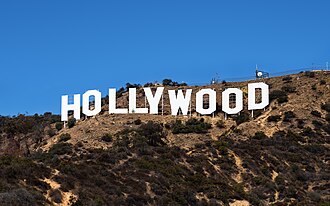
The United States have been the host nation for the modern Olympics on eight occasions. The 2028 Summer Olympics will be held in Los Angeles, upping the tally to nine.
American athletes have won a total of 2,765 medals (1,105 of them gold) at the Summer Olympic Games, and another 363 (126 of them gold) at the Winter Olympic Games, making the United States the most prolific medal-winning nation in the history of the Olympics. The U.S. has placed first in the Summer Olympic medal table 19 times out of 30 Summer Olympics and 29 appearances (having boycotted in 1980), but has had less success in the Winter Olympics, placing first once in 24 participations.
The United States Olympic contingent is the only Olympic contingent in the world to receive no government funding; neither training and development costs nor prize money are provided by the U.S. national government.
Hosted Games
The United States has hosted the modern Olympic Games eight times, more than any other country. These events took place from the 1904 St. Louis Olympics up to the 2002 Salt Lake City Winter Olympics. The U.S. has helped shape the Olympics through its achievements, new ideas for sports facilities, and cultural impact. Even when not hosting, the U.S. has supported the Olympics through groups like the United States Olympic Committee and the International Olympic Committee.
In the future, Los Angeles will host the Olympics again in 2028, marking the ninth time the U.S. will have been an Olympic host. Hosting the Games often leaves lasting benefits for cities, such as better facilities and increased visitors.
| Games | Host city | Dates | Nations | Participants | Events |
|---|---|---|---|---|---|
| 1904 Summer Olympics | St. Louis, Missouri | July 1 – November 23 | 12 | 666 | 95 |
| 1932 Winter Olympics | Lake Placid, New York | February 7 – 15 | 17 | 252 | 14 |
| 1932 Summer Olympics | Los Angeles, California | July 30 – August 14 | 37 | 1,332 | 117 |
| 1960 Winter Olympics | Squaw Valley, California | February 18 – 28 | 30 | 665 | 27 |
| 1980 Winter Olympics | Lake Placid, New York | February 13 – 24 | 37 | 1,072 | 38 |
| 1984 Summer Olympics | Los Angeles, California | July 28 – August 12 | 140 | 6,829 | 221 |
| 1996 Summer Olympics | Atlanta, Georgia | July 19 – August 4 | 197 | 10,318 | 271 |
| 2002 Winter Olympics | Salt Lake City, Utah | February 8 – 24 | 77 | 2,399 | 78 |
| 2028 Summer Olympics | Los Angeles, California | July 14 – 30 | TBA | TBA | TBA |
| 2034 Winter Olympics | Salt Lake City, Utah | February 10 – 26 | TBA | TBA | TBA |
| Games | City | Eventually hosted by |
|---|---|---|
| 1976 Winter Olympics | Denver | Innsbruck |
Medal tables
See also: All-time Olympic Games medal table
The United States first joined the Olympics in 1896 in Athens, the very first modern games. The U.S. had its best performance in 1904 in St. Louis, Missouri, winning more medals than ever before—a record that still stands. During the 1920s and 1930s, the U.S. did very well in the Summer Olympics, winning the most medals for several Games in a row. After World War II, other countries like the Soviet Union became strong competitors. The U.S. did not lead the medal count again until 1996, after the Soviet Union collapsed. A highlight was the 1984 games in Los Angeles, where the U.S. won a record 83 gold medals.
The U.S. wasn’t a top country in the Winter Olympics until the 2002 Olympics in Salt Lake City. Since then, U.S. athletes have always placed in the top four. The best year was the 2010 Winter Olympics in Vancouver, where the U.S. won 37 medals.
The United States has never won Olympic medals in some sports like badminton, handball, and table tennis. In winter sports, the only one the U.S. hasn’t won a medal in is biathlon.
| Games | Athletes | Gold | Silver | Bronze | Total | Gold medal | Total medal |
|---|---|---|---|---|---|---|---|
| 1896 Athens | 14 | 11 | 7 | 2 | 20 | 1 | 2 |
| 1900 Paris | 75 | 19 | 14 | 15 | 48 | 2 | 2 |
| 1904 St. Louis | 526 | 76 | 78 | 77 | 231 | 1 | 1 |
| 1908 London | 122 | 23 | 12 | 12 | 47 | 2 | 2 |
| 1912 Stockholm | 174 | 26 | 19 | 19 | 64 | 1 | 2 |
| 1920 Antwerp | 288 | 41 | 27 | 27 | 95 | 1 | 1 |
| 1924 Paris | 299 | 45 | 27 | 27 | 99 | 1 | 1 |
| 1928 Amsterdam | 280 | 22 | 18 | 16 | 56 | 1 | 1 |
| 1932 Los Angeles | 474 | 44 | 36 | 30 | 110 | 1 | 1 |
| 1936 Berlin | 359 | 24 | 21 | 12 | 57 | 2 | 2 |
| 1948 London | 300 | 38 | 27 | 19 | 84 | 1 | 1 |
| 1952 Helsinki | 286 | 40 | 19 | 17 | 76 | 1 | 1 |
| 1956 Melbourne | 297 | 32 | 25 | 17 | 74 | 2 | 2 |
| 1960 Rome | 292 | 34 | 21 | 16 | 71 | 2 | 2 |
| 1964 Tokyo | 346 | 36 | 26 | 28 | 90 | 1 | 2 |
| 1968 Mexico City | 357 | 45 | 28 | 34 | 107 | 1 | 1 |
| 1972 Munich | 400 | 33 | 31 | 30 | 94 | 2 | 2 |
| 1976 Montreal | 396 | 34 | 35 | 25 | 94 | 3 | 2 |
| 1980 Moscow | boycotted | ||||||
| 1984 Los Angeles | 522 | 83 | 61 | 30 | 174 | 1 | 1 |
| 1988 Seoul | 527 | 36 | 31 | 27 | 94 | 3 | 3 |
| 1992 Barcelona | 545 | 37 | 34 | 37 | 108 | 2 | 2 |
| 1996 Atlanta | 646 | 44 | 32 | 25 | 101 | 1 | 1 |
| 2000 Sydney | 586 | 37 | 24 | 32 | 93 | 1 | 1 |
| 2004 Athens | 533 | 36 | 39 | 26 | 101 | 1 | 1 |
| 2008 Beijing | 588 | 36 | 39 | 37 | 112 | 2 | 1 |
| 2012 London | 530 | 48 | 26 | 31 | 105 | 1 | 1 |
| 2016 Rio de Janeiro | 554 | 46 | 37 | 38 | 121 | 1 | 1 |
| 2020 Tokyo | 615 | 39 | 41 | 33 | 113 | 1 | 1 |
| 2024 Paris | 592 | 40 | 44 | 42 | 126 | 1 | 1 |
| 2028 Los Angeles | future event | ||||||
| 2032 Brisbane | future event | ||||||
| Total (29/30) | 11,523 | 1,105 | 879 | 781 | 2,765 | 1 | 1 |
| Games | Athletes | Gold | Silver | Bronze | Total | Gold medal | Total medal |
|---|---|---|---|---|---|---|---|
| 1924 Chamonix | 24 | 1 | 2 | 1 | 4 | 5 | 3 |
| 1928 St. Moritz | 24 | 2 | 2 | 2 | 6 | 2 | 2 |
| 1932 Lake Placid | 64 | 6 | 4 | 2 | 12 | 1 | 1 |
| 1936 Garmisch-Partenkirchen | 55 | 1 | 0 | 3 | 4 | 8 | 6 |
| 1948 St. Moritz | 69 | 3 | 4 | 2 | 9 | 4 | 4 |
| 1952 Oslo | 65 | 4 | 6 | 1 | 11 | 2 | 2 |
| 1956 Cortina d'Ampezzo | 67 | 2 | 3 | 2 | 7 | 6 | 5 |
| 1960 Squaw Valley | 79 | 3 | 4 | 3 | 10 | 3 | 2 |
| 1964 Innsbruck | 89 | 1 | 2 | 4 | 7 | 8 | 8 |
| 1968 Grenoble | 95 | 1 | 5 | 1 | 7 | 9 | 8 |
| 1972 Sapporo | 103 | 3 | 2 | 3 | 8 | 5 | 6 |
| 1976 Innsbruck | 106 | 3 | 3 | 4 | 10 | 3 | 3 |
| 1980 Lake Placid | 101 | 6 | 4 | 2 | 12 | 3 | 3 |
| 1984 Sarajevo | 107 | 4 | 4 | 0 | 8 | 3 | 4 |
| 1988 Calgary | 118 | 2 | 1 | 3 | 6 | 9 | 9 |
| 1992 Albertville | 147 | 5 | 4 | 2 | 11 | 5 | 6 |
| 1994 Lillehammer | 147 | 6 | 5 | 2 | 13 | 5 | 5 |
| 1998 Nagano | 186 | 6 | 3 | 4 | 13 | 5 | 6 |
| 2002 Salt Lake City | 202 | 10 | 13 | 11 | 34 | 3 | 2 |
| 2006 Turin | 204 | 9 | 9 | 7 | 25 | 2 | 2 |
| 2010 Vancouver | 212 | 9 | 15 | 13 | 37 | 3 | 1 |
| 2014 Sochi | 222 | 9 | 9 | 10 | 28 | 4 | 2 |
| 2018 Pyeongchang | 241 | 9 | 8 | 6 | 23 | 4 | 4 |
| 2022 Beijing | 224 | 9 | 9 | 7 | 25 | 3 | 5 |
| 2026 Milano Cortina | 232 | 12 | 12 | 9 | 33 | 2 | 2 |
| 2030 French Alps | Future event | ||||||
| 2034 Utah | Future event | ||||||
| Total (25/25) | 3,183 | 126 | 133 | 104 | 363 | 2 | 2 |
| Summer Olympics Gold medals – 83 (1984 Summer Olympics), Olympic record Total medals – 231 (1904 Summer Olympics), Olympic record | Winter Olympics Gold medals – 12 (2026 Winter Olympics) Total medals – 37 (2010 Winter Olympics) |
| Sport | Gold | Silver | Bronze | Total |
|---|---|---|---|---|
 Athletics Athletics | 358 | 280 | 224 | 862 |
 Swimming Swimming | 265 | 191 | 150 | 606 |
 Shooting Shooting | 58 | 34 | 29 | 121 |
 Wrestling Wrestling | 57 | 46 | 42 | 145 |
 Boxing Boxing | 50 | 27 | 41 | 118 |
 Diving Diving | 49 | 47 | 46 | 142 |
 Gymnastics Gymnastics | 40 | 44 | 42 | 126 |
 Rowing Rowing | 34 | 32 | 25 | 91 |
 Basketball Basketball | 27 | 2 | 3 | 32 |
 Tennis Tennis | 21 | 7 | 13 | 41 |
 Cycling Cycling | 20 | 24 | 22 | 66 |
 Sailing Sailing | 19 | 23 | 20 | 62 |
 Weightlifting Weightlifting | 17 | 17 | 12 | 46 |
 Archery Archery | 14 | 11 | 10 | 35 |
 Equestrian Equestrian | 11 | 24 | 20 | 55 |
 Beach volleyball Beach volleyball | 7 | 2 | 2 | 11 |
 Fencing Fencing | 6 | 12 | 19 | 37 |
 Canoeing Canoeing | 6 | 6 | 7 | 19 |
 Golf Golf | 6 | 3 | 5 | 14 |
 Artistic swimming Artistic swimming | 5 | 3 | 2 | 10 |
 Football Football | 5 | 2 | 2 | 9 |
 Water polo Water polo | 4 | 6 | 6 | 16 |
 Volleyball Volleyball | 4 | 4 | 5 | 13 |
 Taekwondo Taekwondo | 3 | 2 | 6 | 11 |
 Softball Softball | 3 | 2 | 0 | 5 |
 Judo Judo | 2 | 4 | 8 | 14 |
 Rugby Rugby | 2 | 0 | 1 | 3 |
 Surfing Surfing | 2 | 0 | 0 | 2 |
 Triathlon Triathlon | 1 | 2 | 2 | 5 |
 Baseball Baseball | 1 | 1 | 2 | 4 |
 Roque Roque | 1 | 1 | 1 | 3 |
 Tug of war Tug of war | 1 | 1 | 0 | 2 |
 3x3 basketball 3x3 basketball | 1 | 0 | 1 | 2 |
 Jeu de paume Jeu de paume | 1 | 0 | 0 | 1 |
 Modern pentathlon Modern pentathlon | 0 | 6 | 3 | 9 |
 Skateboarding Skateboarding | 0 | 2 | 3 | 5 |
 Sport climbing Sport climbing | 0 | 2 | 1 | 3 |
 Polo Polo | 0 | 1 | 1 | 2 |
 Lacrosse Lacrosse | 0 | 1 | 0 | 1 |
 Marathon swimming Marathon swimming | 0 | 1 | 0 | 1 |
 Field hockey Field hockey | 0 | 0 | 2 | 2 |
 Breaking Breaking | 0 | 0 | 1 | 1 |
 Karate Karate | 0 | 0 | 1 | 1 |
| Totals (43 entries) | 1,101 | 873 | 780 | 2,754 |
| Sport | Gold | Silver | Bronze | Total |
|---|---|---|---|---|
 Speed skating Speed skating | 32 | 24 | 20 | 76 |
 Alpine skiing Alpine skiing | 19 | 22 | 11 | 52 |
 Figure skating Figure skating | 19 | 17 | 21 | 57 |
 Snowboarding Snowboarding | 17 | 9 | 11 | 37 |
 Freestyle skiing Freestyle skiing | 14 | 17 | 10 | 41 |
 Bobsleigh Bobsleigh | 9 | 11 | 11 | 31 |
 Ice hockey Ice hockey | 6 | 12 | 2 | 20 |
 Short track speed skating Short track speed skating | 4 | 7 | 10 | 21 |
 Skeleton Skeleton | 3 | 4 | 1 | 8 |
 Cross-country skiing Cross-country skiing | 1 | 4 | 2 | 7 |
 Nordic combined Nordic combined | 1 | 3 | 0 | 4 |
 Curling Curling | 1 | 1 | 1 | 3 |
 Luge Luge | 0 | 3 | 4 | 7 |
 Ski jumping Ski jumping | 0 | 0 | 1 | 1 |
| Totals (14 entries) | 126 | 134 | 105 | 365 |


Flagbearers
See also: List of flag bearers for the United States at the Olympics
The United States has had many athletes carry their flag at the opening ceremonies of the Olympic Games. These special moments show the pride and honor of each athlete representing their country on the world's biggest stage.
History
For the early history, see History of the United States at the Olympics.
U.S. athletes have competed in every Summer Olympics since 1992, improving their performance in many sports. They have finished second in the medal count in some years and first in many others.
At the 2016 Summer Games, athlete Kim Rhode became the only female Olympian to win a medal in six straight Games. In the 2020 Summer Olympics, held in Tokyo in 2021 because of the COVID-19 pandemic, Sunisa Lee won the gymnastics all-around gold medal, making history as the first Hmong American and first gymnast of Asian descent to achieve this. Lydia Jacoby won gold in swimming, and Ryan Crouser set new Olympic records in the shot put. The U.S. led in the overall medal count with 113 medals.
At the 2022 Winter Olympics, the U.S. did not send officials in a diplomatic boycott but allowed athletes to compete. The team won 25 medals, including notable victories by Jessie Diggins in cross-country skiing, Nathan Chen in figure skating, Erin Jackson in speed skating, and Chloe Kim in snowboarding.
Amateurism and professionalism
The idea of only allowing amateur athletes in the Olympics caused some problems. For example, Jim Thorpe, who won two gold medals in the 1912 Olympic games, lost his medals when it was found out he had played baseball for money before the Olympics. Later, in 1983, his medals were given back to his family.
As time went on, some countries started paying their athletes to train full-time, which made it hard for athletes who had to pay their own way. This change led to the Olympics allowing professional athletes to compete, which happened in the 1990s after big changes in how the games were organized.
Main article: Amateurism
Prize money
When a U.S. athlete wins an Olympic medal, they receive money from the United States Olympic & Paralympic Committee (USOPC). As of 2016, the USOPC gave $25,000 for gold, $15,000 for silver, and $10,000 for bronze. In 2017, these amounts increased to $37,000 for gold, $22,500 for silver, and $15,000 for bronze. Since 2018, Paralympic athletes receive the same payments as Olympians.
In 2025, the USOPC received a historic $100 million donation to support future Olympic and Paralympic athletes. Starting with the 2026 Milan Games, each athlete will receive $200,000 per Olympic appearance. This money helps athletes manage financial challenges they face due to intense training schedules. The donation aims to provide long-term financial security for athletes after their careers end. Many U.S. athletes struggle financially because the U.S. government does not fund the Olympic program, unlike in many other countries. Instead, U.S. athletes rely on sponsorships, media deals, and fundraising for support.
Main article: International Paralympic Committee
Main articles: asset management, alternative investments, assets under management
Doping
The United States has had eight Olympic medals taken away because of rule-breaking related to special substances. These decisions were made by the Olympic leaders, not the United States government or Olympic team leaders.
One famous case was swimmer Rick DeMont, who won a gold medal in 1972 but lost it because a test showed a special substance in his medicine. He had told leaders about his medicine ahead of time.
Later, papers showed that some American athletes failed tests for special substances between 1988 and 2000 but were still allowed to compete. This caused questions about fairness. For example, runner Carl Lewis said he accidentally took something that had banned substances in it.
Disqualified medalists
Main article: List of stripped Olympic medals
The United States has had eight Olympic medals taken away. Here are the athletes and events affected:
- 1972 Summer Olympics, Rick DeMont – first place, gold medalist, Swimming, Men's 400 m freestyle
- 2000 Summer Olympics, Marion Jones – first place, gold medalist, Athletics, Women's 100 m
- 2000 Summer Olympics, Marion Jones – first place, gold medalist, Athletics, Women's 200 m
- 2000 Summer Olympics, Marion Jones – third place, bronze medalist, Athletics, Women's long jump
- 2000 Summer Olympics, Relay team (Antonio Pettigrew, Jerome Young) – first place, gold medalists, Athletics, Men's 4 × 400 m relay
- 2000 Summer Olympics, Lance Armstrong – third place, bronze medalist, Cycling, Men's road time trial
- 2004 Summer Olympics, Tyler Hamilton – first place, gold medalist, Cycling, Men's road time trial
- 2012 Summer Olympics, Relay team (Tyson Gay) – second place, silver medalist, Athletics, Men's 4 × 100 m relay
Pictures
Keep exploring


This article is a child-friendly adaptation of the Wikipedia article on United States at the Olympics, available under CC BY-SA 4.0.
Images from Wikimedia Commons. Tap any image to view credits and license.