 Safekipedia
2022 Winter Olympics
Adapted from Wikipedia · Discoverer experience
The 2022 Winter Olympics, officially called the XXIV Olympic Winter Games, were an international winter multi-sport event held from February 4 to 20, 2022, in Beijing, China, and surrounding areas. It was the 24th edition of the Winter Olympic Games. Beijing had previously hosted the 2008 Summer Olympics, making it the first city to host both the Summer and Winter Olympics.
The Games featured 109 medal events across 15 disciplines, with seven new events introduced, including big air freestyle skiing and women's monobob. A total of 2,880 athletes from 91 teams competed, with Haiti and Saudi Arabia making their Winter Olympic debut.
Norway topped the medal table for the third straight Winter Olympics, winning 37 medals, including a record 16 golds. Germany finished second, and the United States came third. Host nation China had its most successful Winter Olympics, finishing fourth with nine gold medals. The Games took place during the COVID-19 pandemic, with strict health measures in place to prevent outbreaks.
Bidding process
Main article: Bids for the 2022 Winter Olympics
The International Olympic Committee announced the bidding calendar in October 2012, with cities needing to apply by November 14, 2013. In July 2014, the committee reviewed bids and chose three cities to move forward: Oslo in Norway, Almaty in Kazakhstan, and Beijing in China.
Several cities dropped out during the process, often because the costs were too high or there wasn’t enough local support. Oslo, which was leading, withdrew its bid after learning about unusual requests from the IOC that were very unpopular in Norway. Beijing was finally chosen to host the 2022 Winter Olympics after beating Almaty by four votes in July 2015.
 Kazakhstan
Impact of the COVID-19 pandemic
See also: 2020 Summer Olympics § Biosecurity protocols, COVID-19 pandemic in mainland China, and Impact of the COVID-19 pandemic on sports
The 2022 Winter Olympics had strict rules to keep everyone safe from getting sick. Everyone had to use health apps and get checked every day. Only people from China could watch the games, and many events had no audience at all. Some players from hockey decided not to join because they were worried about getting sick.
Because of these rules, some really good athletes couldn’t come to the games even if they felt fine, because they had tested positive for the virus.
Development and preparations
The 2022 Winter Olympics used 26 venues that ran on renewable energy. Venues were spread across three zones: Beijing, Zhangjiakou, and Yanqing. In Beijing, some venues were newly built, while others were renovated from the 2008 Summer Olympics. Key venues included the Bird's Nest for ceremonies and the Water Cube for curling. New venues like the Shougang Big Air hosted snowboarding and freestyle skiing.
The Zhangjiakou Zone hosted skiing events, with construction finishing in early 2021. The Games aimed to be carbon neutral, using renewable energy and planting forests to offset emissions. Despite some criticism, the Olympics introduced new technologies like natural CO2 refrigerants to cut down on carbon emissions.
Ceremonies
The opening ceremony of the 2022 Winter Olympics took place on February 4, 2022, at the Beijing National Stadium. Athletes and leaders from around the world gathered to celebrate the start of the games.
The closing ceremony happened on February 20, 2022, also at the Beijing National Stadium. It featured a cultural show and officially passed the Olympic flag to Milan and Cortina d'Ampezzo, which would host the next Winter Olympics in 2026.
Sports
The 2022 Winter Olympics featured a record 109 medal events across 15 different disciplines in seven sports. Some new events included men's and women's big air freestyle, women's monobob, and mixed-team competitions in several sports.
Here are the sports and the number of events in each:
- Alpine skiing (11 events)
- Biathlon (11 events)
- Bobsleigh (4 events)
- Cross-country skiing (12 events)
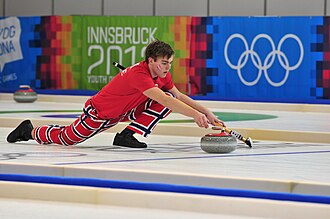
- Curling (3 events)
- Figure skating (5 events)
- Freestyle skiing (13 events)
- Ice hockey (2 events)
- Luge (4 events)
- Nordic combined (3 events)
- Short-track speed skating (9 events)
- Skeleton (2 events)
- Ski jumping (5 events)
- Snowboarding (11 events)
- Speed skating (14 events)
Participating National Olympic Committees
In 2019, the World Anti-Doping Agency banned Russia from international sports for four years. However, in 2020, this was changed so that Russian athletes could compete as "Neutral Athletes" for two years, without using their country’s name, flag, or anthem.
Eventually, Russia was allowed to compete under the acronym “ROC,” representing the Russian Olympic Committee. Sadly, North Korea chose not to participate due to concerns about the COVID-19 pandemic. Overall, 91 National Olympic Committees took part, with Haiti and Saudi Arabia joining for the first time. In total, 2,871 athletes from these committees competed in the Games.


Calendar
Competition at the 2022 Winter Olympics started two days before the opening ceremony on February 2, 2022, and finished on February 20, 2022. The schedule went through many changes and needed approval from the IOC. All times and dates are listed in China Standard Time, which is UTC+8.
See also: Chronological summary of the 2022 Winter Olympics
| February 2022 | 2nd Wed | 3rd Thu | 4th Fri | 5th Sat | 6th Sun | 7th Mon | 8th Tue | 9th Wed | 10th Thu | 11th Fri | 12th Sat | 13th Sun | 14th Mon | 15th Tue | 16th Wed | 17th Thu | 18th Fri | 19th Sat | 20th Sun | Events | |
|---|---|---|---|---|---|---|---|---|---|---|---|---|---|---|---|---|---|---|---|---|---|
 Ceremonies Ceremonies | OC | CC | —N/a | ||||||||||||||||||
 Alpine skiing Alpine skiing | 2 | 1 | 1 | 1 | 1 | 1 | 1 | 1 | 1 | 1 | 11 | ||||||||||
 Biathlon Biathlon | 1 | 1 | 1 | 1 | 1 | 2 | 1 | 1 | 2 | 11 | |||||||||||
 Bobsleigh Bobsleigh | ● | 1 | 1 | ● | 1 | 1 | 4 | ||||||||||||||
 Cross-country skiing Cross-country skiing | 1 | 1 | 2 | 1 | 1 | 1 | 1 | 2 | 1 | 1 | 12 | ||||||||||
 Curling Curling | ● | ● | ● | ● | ● | ● | 1 | ● | ● | ● | ● | ● | ● | ● | ● | ● | ● | 1 | 1 | 3 | |
 Figure skating Figure skating | ● | ● | 1 | ● | 1 | ● | 1 | ● | 1 | ● | 1 | EG | 5 | ||||||||
 Freestyle skiing Freestyle skiing | ● | 1 | 1 | ● | 1 | 1 | 1 | 1 | 1 | 2 | 1 | 2 | 1 | 13 | |||||||
 Ice hockey Ice hockey | ● | ● | ● | ● | ● | ● | ● | ● | ● | ● | ● | ● | ● | ● | 1 | ● | ● | 1 | 2 | ||
 Luge Luge | ● | 1 | ● | 1 | 1 | 1 | 4 | ||||||||||||||
 Nordic combined Nordic combined | 1 | 1 | 1 | 3 | |||||||||||||||||
 Short track speed skating Short track speed skating | 1 | 2 | 1 | 1 | 2 | 2 | 9 | ||||||||||||||
 Skeleton Skeleton | ● | 1 | 1 | 2 | |||||||||||||||||
 Ski jumping Ski jumping | 1 | 1 | 1 | ● | 1 | 1 | 5 | ||||||||||||||
 Snowboarding Snowboarding | ● | 1 | 1 | 2 | 1 | 2 | 1 | 1 | ● | 2 | 11 | ||||||||||
 Speed skating Speed skating | 1 | 1 | 1 | 1 | 1 | 1 | 1 | 1 | 2 | 1 | 1 | 2 | 14 | ||||||||
| Daily medal events | 0 | 0 | 0 | 6 | 6 | 9 | 10 | 6 | 8 | 7 | 6 | 7 | 4 | 9 | 8 | 6 | 5 | 7 | 5 | 109 | |
| Cumulative total | 0 | 0 | 0 | 6 | 12 | 21 | 31 | 37 | 45 | 52 | 58 | 65 | 69 | 78 | 86 | 92 | 97 | 104 | 109 | ||
| February 2022 | 2nd Wed | 3rd Thu | 4th Fri | 5th Sat | 6th Sun | 7th Mon | 8th Tue | 9th Wed | 10th Thu | 11th Fri | 12th Sat | 13th Sun | 14th Mon | 15th Tue | 16th Wed | 17th Thu | 18th Fri | 19th Sat | 20th Sun | Total events | |
Medal table
For a more comprehensive list, see 2022 Winter Olympics medal table.
On 29 January 2024, the Court of Arbitration for Sport disqualified Kamila Valieva, a Russian figure skater, for an anti-doping rule violation. As a result, the United States moved up to gold and Japan to silver in the figure skating team event, while the ROC was downgraded to bronze.
| Rank | NOC | Gold | Silver | Bronze | Total |
|---|---|---|---|---|---|
| 1 |  Norway Norway | 16 | 8 | 13 | 37 |
| 2 |  Germany Germany | 12 | 10 | 5 | 27 |
| 3 |  United States‡ United States‡ | 9 | 9 | 7 | 25 |
| 4 |  China* China* | 9 | 4 | 2 | 15 |
| 5 |  Sweden Sweden | 8 | 5 | 5 | 18 |
| 6 |  Netherlands Netherlands | 8 | 5 | 4 | 17 |
| 7 |  Austria Austria | 7 | 7 | 4 | 18 |
| 8 |  Switzerland Switzerland | 7 | 2 | 6 | 15 |
| 9 |  ROC‡ ROC‡ | 5 | 12 | 15 | 32 |
| 10 |  France France | 5 | 7 | 2 | 14 |
| 11–29 | Remaining | 23 | 40 | 47 | 110 |
| Totals (29 entries) | 109 | 109 | 110 | 328 | |
| Date | Sport | Event | Team | Gold | Silver | Bronze |
|---|---|---|---|---|---|---|
| 15 February | Bobsleigh | Two-man bob | Germany | Francesco Friedrich Thorsten Margis | Johannes Lochner Florian Bauer | Christoph Hafer Matthias Sommer |
Marketing
The emblem for the 2022 Winter Olympics, called "Winter Dream," was shown to the world in December 2017. It was designed to look like the Chinese character for winter and features colors that represent the flag of China as well as passion and youth. The emblem’s shape also suggests an ice skater and a skier.
The official mascot was Bing Dwen Dwen, chosen from many designs around the world. The name "Bing" means ice, showing purity and strength, while "Dwen Dwen" suggests robustness and liveliness. The Games’ slogan, “Together for a Shared Future,” was meant to show unity in facing global challenges.
Main article: Bing Dwen Dwen and Shuey Rhon Rhon
Viewership
The 2022 Winter Olympics had many viewers around the world. About 2.01 billion people watched the games on TV or online. People spent a total of 713 billion minutes watching the Olympics on different channels, which is 18% more than the previous Winter Olympics.
Broadcasting
Main article: List of 2022 Winter Olympics broadcasters
In China, the China Media Group held the rights to broadcast the 2022 Winter Olympics, and these rights were shared with China Mobile's Migu streaming service. In the United States and Europe, while fewer people watched the games on TV, many more followed the events on social media and through streaming services. For example, Eurosport and Discovery+ saw a big jump in people watching the games online compared to previous years.
Concerns and controversies
Main article: Concerns and controversies at the 2022 Winter Olympics
During the bidding process for the 2022 Winter Olympics, some people worried that Beijing might not have enough natural snow for the snow sports events. There were concerns about how much water and energy would be needed to make artificial snow.
Some countries and people decided not to send government officials to the games because of concerns about human rights in China. The United States led a diplomatic boycott, and several other countries joined. This decision was mostly about expressing concerns over human rights issues rather than stopping the games themselves.
There were also some disagreements during the sports events, like decisions about who should win or be allowed to compete. Some athletes and teams were unhappy with the food and conditions in the places where athletes who had COVID-19 had to stay. The weather during the games sometimes made it hard to compete, with very cold temperatures and heavy snow affecting some events.
Images
Related articles


This article is a child-friendly adaptation of the Wikipedia article on 2022 Winter Olympics, available under CC BY-SA 4.0.
Images from Wikimedia Commons. Tap any image to view credits and license.